Do your eyes get itchy every spring? Does your nose run as soon as pollen counts start rising? If you are looking for natural ways to feel better without the usual brain-fog side effects of conventional antihistamines, you have likely come across one powerful supplement pairing: quercetin with bromelain.
This guide breaks down how this dynamic nutrient duo works, what clinical evidence supports its use, standard dosage guidelines, and key safety information in clear, straightforward language.
What Is Quercetin with Bromelain?
To understand why this combination is so popular, it helps to look at each compound individually:
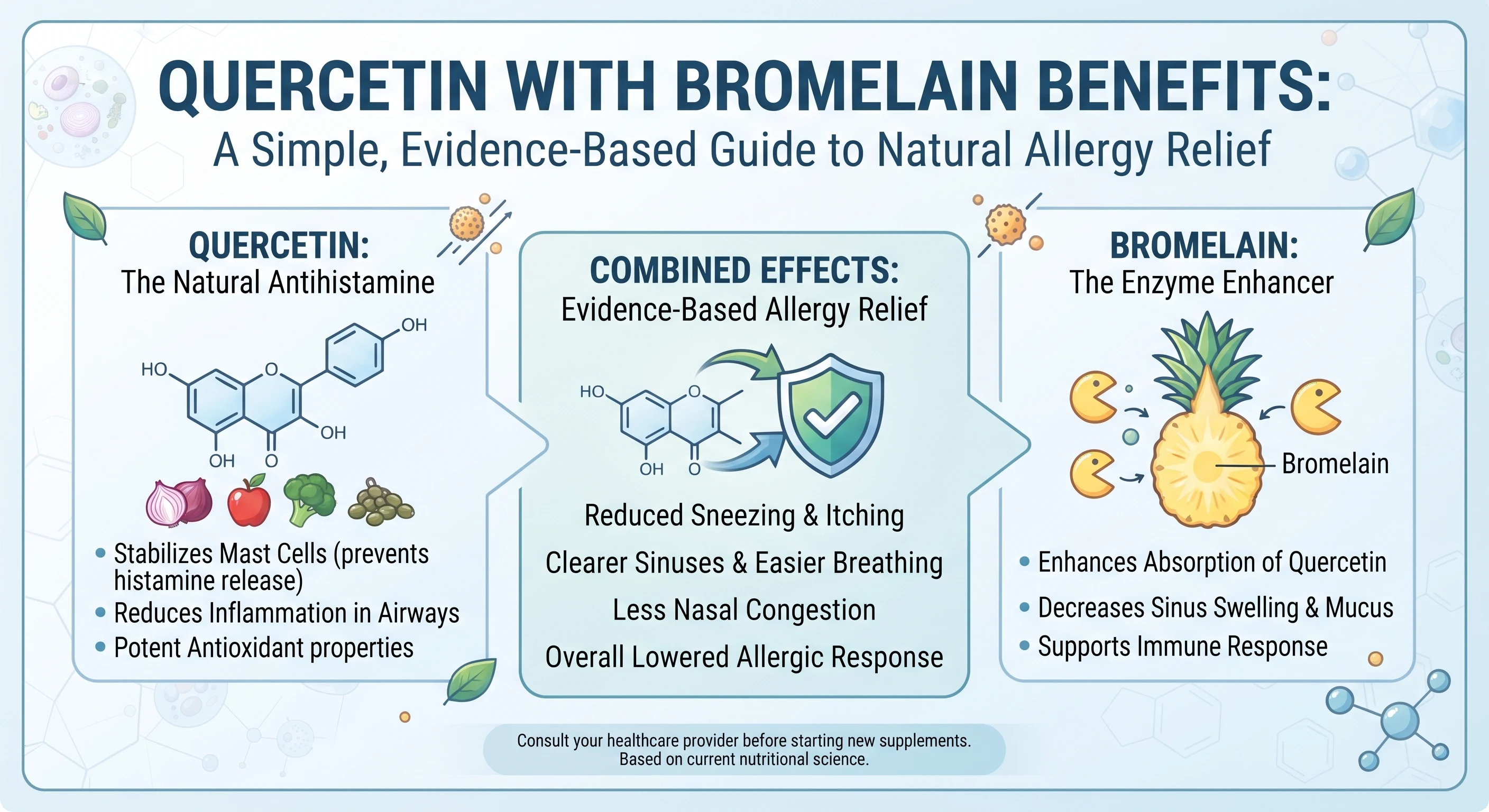
● Quercetin: A potent bioflavonoid (plant pigment) found naturally in foods like red onions, apples, berries, and green tea. It acts as a powerful antioxidant and anti-inflammatory agent.
● Bromelain: A mixture of protein-digesting enzymes (proteases) extracted from the fruit and stem of pineapples.
While both compounds offer individual health benefits, taking them together creates a synergistic effect. Bromelain enhances the intestinal absorption and overall bioavailability of quercetin in your digestive system, while also offering its own anti-inflammatory support.
What Are the Key Benefits of Quercetin with Bromelain?
The combination of quercetin and bromelain targets allergy symptoms and systemic inflammation at the cellular level. Key benefits include:
● Targeted Seasonal Allergy Relief: Helps lessen common symptoms like sneezing, nasal congestion, sinus pressure, and itchy, watery eyes.
● Natural Mast Cell & Histamine Control: Stabilizes immune cells before they release histamine into your bloodstream.
● Enhanced Bioavailability: Bromelain acts as an absorption enhancer, helping your body utilize higher amounts of quercetin.
● Reduced Tissue Inflammation & Swelling: Bromelain helps break down inflammatory proteins (kinins and fibrin), easing sinus blockage and joint discomfort.
● Digestive Support: As a proteolytic enzyme, bromelain assists in breaking down dietary proteins and promoting overall digestive comfort.
Does Quercetin Actually Help with Allergies?
Yes, scientific research and clinical use show that quercetin can significantly attenuate allergic responses, functioning best as a preventive natural therapy.
When your body encounters an allergen like pollen or dust mites, specialized immune cells called mast cells break open and release histamine and pro-inflammatory compounds (such as cytokines like IL-6 and TNF-alpha). Histamine triggers classic allergy symptoms: tissue swelling, mucus production, itching, and sneezing.
Quercetin functions as a natural mast cell stabilizer. It helps seal and strengthen mast cell membranes, preventing them from rupturing and releasing histamine in response to triggers.
How Do Quercetin and Bromelain Work Together?
The synergy between these two nutrients involves a multi-step mechanism:
Nutrient
Primary Mechanism
Allergy & Inflammatory Effect
Quercetin
Mast cell membrane stabilization & histamine release inhibition
Prevents the onset of itching, sneezing, and sinus congestion.
Bromelain
Breakdown of inflammatory proteins (kinins/fibrin) & enzyme activity
Reduces nasal mucosa swelling and clears airway mucus buildup.
Combined Synergy
Enhanced mucosal absorption & dual-pathway enzyme modulation
Maximizes quercetin bioavailability while tackling inflammation across multiple pathways.
How Long Does It Take to Work?
Unlike synthetic antihistamines that offer immediate, short-term symptom relief, natural bioflavonoids work by building up tissue levels over time.
Most individuals begin noticing a meaningful reduction in allergy symptoms after 5 to 14 days of consistent daily use.
Pro Tip: For peak pollen seasons, begin supplementation 2 to 4 weeks before your typical allergy season starts. Pre-loading allows quercetin to stabilize mast cells before high pollen exposure occurs.
What Is the Recommended Dosage for Allergies?
While you should always review individual product labels and consult your healthcare provider, standard evidence-based clinical dosages for allergy and sinus support typically follow these parameters:
● Quercetin: 500 mg, taken 1 to 2 times daily.
● Bromelain: 100 mg to 250 mg per dose (often measured in GDU/MCU for enzymatic activity).
Best Practices for Taking This Supplement:
● Timing: For maximum absorption, take quercetin with bromelain roughly 20–30 minutes before meals on an empty stomach.
● Absorption Boosters: Pairing quercetin with Vitamin C or healthy fats (like avocado or coconut oil) can further enhance its bioavailability.
Are There Any Side Effects?
Quercetin with bromelain is generally well tolerated by most adults when taken at recommended dosages. However, mild side effects can occasionally occur:
● Upset stomach or mild nausea
● Mild headaches
● Tingling sensation in the extremities (rare, typically associated with high doses over 1,000 mg/day)
● Loose stools or digestive discomfort (due to bromelain’s enzymatic activity)
Who Should Avoid Quercetin with Bromelain? (Important Interactions)
While natural, this combination exerts active biological effects and may not be suitable for everyone. Consult a physician prior to use if you fall into any of the following categories:
● Taking Blood Thinners: Bromelain exhibits mild antiplatelet activity. Combining it with anticoagulant/antiplatelet medications (such as Warfarin, Aspirin, or Plavix) can increase the risk of bleeding.
● Taking Antibiotics: Quercetin can bind to quinolone antibiotics (e.g., Ciprofloxacin) and reduce their absorption and effectiveness.
● Taking Blood Pressure or Immunosuppressive Drugs: Quercetin can alter CYP3A4 and P-glycoprotein enzyme pathways, which may affect how your body metabolizes medications like Cyclosporine or blood pressure drugs.
● Pre-existing Kidney Disease: High doses of quercetin (>1,000 mg daily) taken over long periods have been associated with potential renal stress in vulnerable individuals.
● Pineapple Allergy: Because bromelain is extracted from pineapples, individuals with pineapple allergies should avoid this supplement.
● Pregnancy & Breastfeeding: There is insufficient clinical safety data regarding supplementation during pregnancy or nursing.
● Upcoming Surgery: Discontinue taking bromelain at least 2 weeks prior to scheduled surgical procedures due to bleeding risks.
What to Look for When Buying a Supplement
When selecting a high-quality quercetin with bromelain supplement, look for:
1. Clear Potency Labeling: Look for products stating exact milligram dosages and bromelain enzyme potency (measured in GDU/Gelatin Digesting Units or MCU).
2. Third-Party Quality Testing: Ensure the brand tests for heavy metals, purity, and microbial contaminants via independent labs (e.g., NSF, USP, or ISO-certified labs).
3. Clean Ingredients: Avoid formulas containing unnecessary artificial binders, fillers, or allergen triggers.
4. Transparent Sourcing: Choose brands committed to ethical sourcing and clear manufacturing practices.
The Bottom Line
Quercetin with bromelain is a natural option that may help ease allergy symptoms and support your body's response to inflammation, especially when taken consistently and from a quality source. It's not a replacement for medical advice, so if you have health conditions or take medication, check with your doctor first.
Want to see a trusted option? Take a look at the ForestLeaf Quercetin with Bromelain formula, or explore more ways to manage allergies naturally in our Allergy health section.
This article is for general information only and isn't a substitute for medical advice. Talk to your doctor before starting any new supplement.