N-Acetyl-L-Cysteine (NAC) is a sulfur-rich amino acid that your body converts into glutathione, its master antioxidant. By replenishing glutathione and neutralizing free radicals, NAC supports immune respiratory support, liver health, detoxification, and—according to emerging research—healthy aging at the cellular level.
Few supplements have earned the kind of scientific attention that N-Acetyl-L-Cysteine commands today. Once known mainly as a hospital antidote for acetaminophen overdose, NAC has stepped firmly into the world of preventive wellness. Researchers now study it for everything from lung function to longevity, and health-conscious adults are taking notice.
The reason is simple: NAC fuels glutathione, the antioxidant your cells rely on to defend against oxidative stress. As we age, our natural glutathione levels fall—often dramatically. That decline is linked to many of the changes we associate with growing older, including tired mitochondria and rising inflammation. NAC offers a practical way to give your body the raw material it needs to push back.
In this guide, you'll learn what NAC is, how it supports your immune, respiratory, and liver systems, what the latest longevity science reveals, and how to use a NAC 600 mg supplement safely. Let's dig in.
What is N-Acetyl-L-Cysteine (NAC)?
N-Acetyl-L-Cysteine is a modified form of cysteine, a sulfur-containing amino acid that occurs naturally in your body. The "acetyl" group attached to the molecule makes it stable and easily absorbed, which is why supplement formulas use this form rather than plain cysteine.
Here's what makes NAC so valuable: it serves as a direct precursor to glutathione. Your body cannot store much glutathione, nor can you absorb meaningful amounts of it from food. Instead, your cells build glutathione fresh every day—and they need cysteine to do it. NAC delivers that cysteine efficiently.
Glutathione is often called the body's master antioxidant for good reason. It protects cells, membranes, lipids, proteins, and even DNA from the damage caused by reactive oxygen species (free radicals). NAC works on two fronts here: it boosts glutathione production, and it scavenges free radicals directly as an antioxidant in its own right.
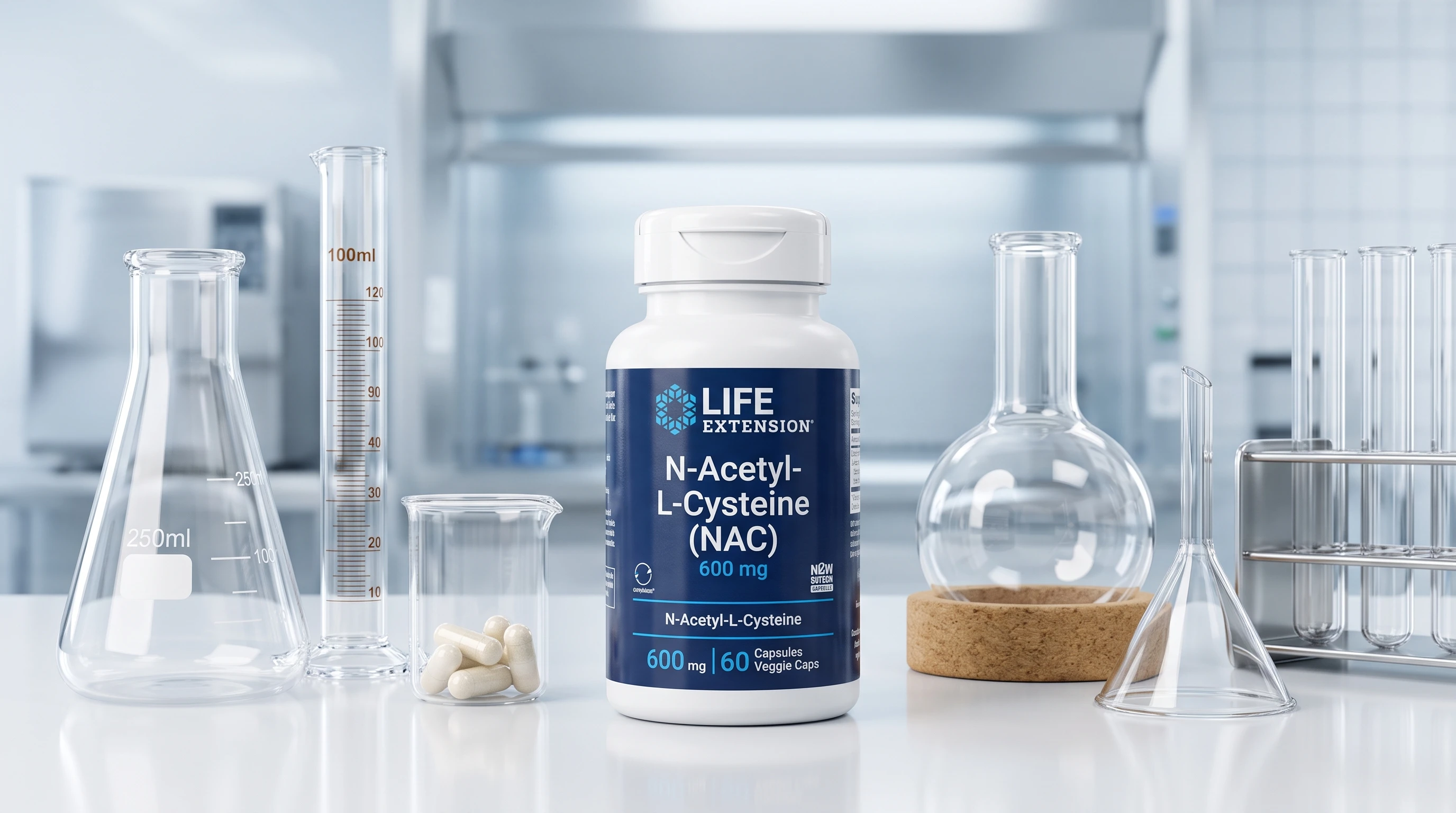
Life Extension's N-Acetyl-L-Cysteine delivers 600 mg of this rapidly absorbed nutrient per capsule. The formula is non-GMO, gluten-free, and made with vegetarian ingredients. It also carries a 4.9-star rating across more than 1,000 reviews, with 98% of users saying they'd recommend it to a friend.
How does NAC support immune and respiratory health?
NAC has built its reputation largely on immune respiratory support, and the mechanisms behind it are genuinely interesting.
Your immune cells work hard, and that hard work creates a byproduct: oxidative stress. Think of it like exhaust from an engine. The harder your immune system runs—especially during a challenge—the more free radicals it generates. Left unchecked, that oxidative load can interfere with how well those cells function at the very moment you need them most. By quenching free radicals and replenishing glutathione, NAC helps your immune cells perform at their best.
On the respiratory side, NAC plays a more direct role. It helps maintain the healthy properties of mucus. That may not sound glamorous, but mucus protects the delicate cells lining your nose, throat, and lungs from dust, pollen, and pathogens. NAC helps keep mucus "loose" so your body can clear it more easily (Kalyuzhin, 2018). It also encourages the production of secretory IgA, an antibody that plays a key role in your respiratory immune defenses.
There's a gut connection, too. Your digestive tract is a frontline of immune defense, and laboratory studies show that NAC can help intestinal cells mount a healthy response to challenges.
Nutrients that pair well with NAC
NAC works smoothly alongside other immune-support nutrients:
- Zinc — supports a healthy immune response and binds to receptors in your upper respiratory tract.
- Vitamin C — a powerful antioxidant that complements NAC's free-radical-fighting action.
- Vitamin D — promotes a balanced immune system, plus bone and cardiovascular health.
As always, talk with your doctor before combining supplements.
How does NAC support liver health and detoxification?
The liver is your body's primary detoxification organ, and it depends heavily on glutathione to do its job. This is exactly why NAC has such a strong track record for liver health detoxification.
In emergency medicine, acetylcysteine is the standard treatment for acetaminophen (Tylenol) overdose. When the liver is overwhelmed by toxins, its glutathione stores are rapidly depleted. NAC steps in to restore those stores, allowing liver cells to neutralize harmful compounds and protect themselves from injury. That clinical use is powerful evidence of how closely NAC and liver function are tied together.
For everyday wellness, NAC encourages healthy liver function by keeping glutathione levels topped up. Research has also explored its role in blocking the buildup of fat in liver tissue, which is relevant to people concerned about non-alcoholic fatty liver disease (PMC, 2021). While a supplement is never a substitute for a healthy lifestyle, NAC provides your liver with meaningful antioxidant support.
If you want a simple, well-tested way to support your liver, immune system, and respiratory health in one step, this NAC 600 mg supplement is worth a look: Shop Life Extension NAC on Amazon.
What does the research say about N-Acetyl-L-Cysteine and longevity?
This is where N-Acetyl-L-Cysteine longevity research gets exciting.
Glutathione levels decline as we age, while oxidative stress climbs. That imbalance is now recognized as a driver of many aging processes. The big question scientists have asked is whether restoring glutathione could slow or reverse some of those changes.
A landmark answer came from Baylor College of Medicine. In a randomized, double-blind, placebo-controlled trial published in the Journal of Gerontology: Medical Sciences (Sekhar et al., 2022), older adults took GlyNAC—a combination of glycine and NAC—for 16 weeks. The results were striking. Participants showed improvements in:
- Oxidative stress and glutathione levels
- Mitochondrial function and mitophagy
- Inflammation and insulin resistance
- Endothelial (blood vessel) function
- Genomic damage and cellular senescence
- Muscle strength, gait speed, and exercise capacity
- Waist circumference and blood pressure
Notably, participants didn't change their diet or exercise habits—the only variable was the supplement. In companion studies with aging mice, GlyNAC supplementation extended lifespan by 24%.
Lead researcher Dr. Rajagopal Sekhar describes the effect as the "Power of 3"—the combined action of glycine, cysteine (from NAC), and the glutathione they help produce. His point is important: taking NAC isn't the same as swallowing glutathione directly. NAC provides the building blocks your cells need to make exactly the amount of glutathione they need.
While more large-scale human trials are underway, the early evidence positions NAC as a compelling tool for anyone interested in healthy aging.
How much NAC should you take? Dosage and usage guidance
A standard NAC 600 mg supplement is the most common and well-studied dose. Life Extension recommends taking one capsule one to three times daily, or as directed by your healthcare practitioner.
A few practical tips:
- Divide your doses. If you take more than one capsule a day, space them out rather than taking them all at once.
- Stay hydrated. Drinking plenty of water supports your kidneys and overall well-being while supplementing.
- Expect a smell. NAC has a natural sulfur odor—some describe it as a "rotten egg" or vinegar scent. This is completely normal and comes from the sulfur in the cysteine molecule. It does not indicate spoilage.
- Choose third-party tested products. Life Extension's NAC was named a "Top Pick" by ConsumerLab, and every batch is tested for potency, purity, and contaminants like heavy metals.
Who should consider taking NAC?
NAC is a versatile supplement, but it's particularly worth considering if you fall into one of these groups:
- Adults focused on healthy aging who want to support glutathione levels and mitochondrial health.
- People seeking immune support for respiratory issues, especially during seasonal challenges.
- Those wanting liver health detoxification support, including individuals exposed to environmental toxins or who want everyday antioxidant backup.
- Active individuals looking to counter exercise-related oxidative stress.
If you're managing a health condition or taking medication, your doctor can help you decide whether NAC fits your routine.
Is NAC safe? Side effects and precautions
NAC is generally well tolerated, and most people experience no issues. That said, it's smart to know the full picture.
Common side effects may include:
- Diarrhea
- Nausea or vomiting
- Upset stomach
- Skin rash
These are usually mild. A small number of users find NAC bothers their stomach, which is one reason dividing doses and taking it with food can help.
Precautions and interactions:
- NAC may interact with nitrate medications (such as nitroglycerin) and pirfenidone, used for pulmonary fibrosis.
- If you are pregnant or breastfeeding, there isn't enough data to confirm safety—avoid use unless your doctor advises otherwise.
- Anyone allergic to acetylcysteine should not take NAC.
Always consult your physician before starting NAC if you take prescription medication or have a diagnosed health condition. Keep all supplements out of reach of children.
Ready to add a trusted, high-quality NAC to your daily routine? You can find the Life Extension NAC 600 mg supplement here: Get Life Extension NAC on Amazon.
Final thoughts on NAC and your wellness routine
N-Acetyl-L-Cysteine has moved well beyond its origins as a hospital antidote. Today it stands as one of the most researched and versatile supplements available, with credible support for immune respiratory health, liver health, detoxification, and—increasingly—healthy aging. Its secret is its simplicity: by supplying the cysteine your cells need to build glutathione, NAC helps your body do what it already knows how to do, just more effectively.
If you're building a science-based supplement routine, a high-quality 600 mg NAC supplement is a sensible foundation. Pair it with good sleep, hydration, and a nutrient-rich diet, and you give your cells a real advantage against oxidative stress.
Your next step is straightforward: talk to your healthcare provider, choose a third-party-tested product, and start supporting your glutathione levels today.
Scientific References and Further Reading
- Sekhar, R. et al. (2022). "Supplementing Glycine and N-Acetylcysteine (GlyNAC) in Aging Humans." Journal of Gerontology: Medical Sciences. Read on PubMed
- Baylor College of Medicine (2022). "GlyNAC supplementation reverses aging hallmarks in aging humans." Read the release
- Tenório, M.C.S. et al. (2021). "N-Acetylcysteine: A Review of Clinical Usefulness." Oxidative Medicine and Cellular Longevity. Read on PMC
- Kalyuzhin, O.V. (2018). "Effect of N-acetylcysteine on mucosal immunity of the respiratory tract." Terapevticheskii Arkhiv. Read on PubMed
- Mokhtari, V. et al. (2017). "A Review on Various Uses of N-Acetyl Cysteine." Cell Journal. Read on PMC
Keep Learning with Atecam
Want more evidence-based health and wellness guidance? Visit the Atecam Health and Wellness blog at www.atecam.com for curated, science-backed articles that help you make confident decisions about supplements, longevity, and everyday well-being.
Frequently Asked Questions
What is NAC best used for?
NAC is most commonly used for immune and respiratory support, liver health and detoxification, and antioxidant protection. It works by boosting your body's production of glutathione, the master antioxidant that defends cells against oxidative stress.
How long does NAC take to work?
Effects vary by goal. Antioxidant and glutathione-related benefits begin building soon after you start, but research on aging used a 16-week supplementation window before measuring significant changes. Consistency matters more than speed.
Can I take NAC every day?
Yes. A NAC 600 mg supplement taken one to three times daily is the standard regimen for ongoing use. For long-term daily use, dividing your doses and staying hydrated can improve comfort.
Why does my NAC supplement smell like sulfur?
The sulfur smell—sometimes compared to rotten eggs or vinegar—is completely normal. It comes from the sulfur group naturally present in the cysteine molecule and does not mean the product has spoiled.
Is NAC the same as glutathione?
No. NAC is a precursor that gives your cells the cysteine they need to produce glutathione in the right amounts. Researchers note this is often more effective than taking glutathione directly, since the body tightly regulates its own glutathione levels.
Who should avoid NAC?
People allergic to acetylcysteine, those taking nitrate medications or pirfenidone, and anyone who is pregnant or breastfeeding should avoid NAC unless directed by a doctor. Always consult your healthcare provider before starting.